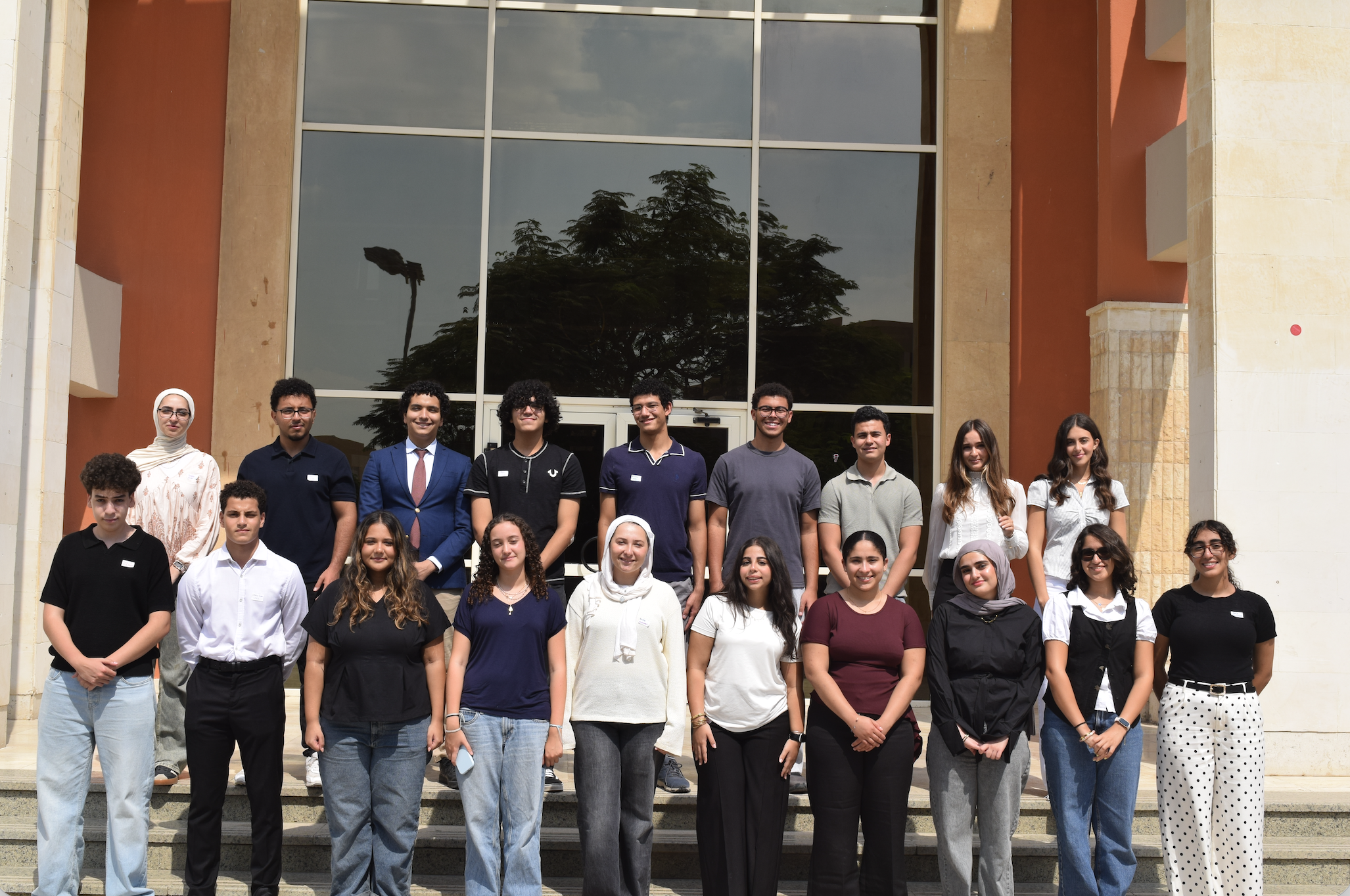
Great energy filled the meeting room in Hayah as MUN members across schools in Egypt joined together. MUNE is an organization that puts together annual meetings to join multiple Model UNs across Egypt in one room for civil, cooperative, and very engaging discussions on plans to successfully organize high impact conferences. The goal of MUNE is to evaluate past conferences and multiple schools to reflect together in order to make future ones as great as possible as a learning experience for students as well as a fun one. The meeting was composed of confident, diplomatic, and collaborative student representatives. The concept of bringing multiple schools together to discuss, reflect, and ultimately plan together created an opportunity for multiple voices to express their concerns for maximum future benefit.
Deputy Secretary General, Nadia Shokri called for the room’s attention, with all diverse social side chats going silent. After a brief warm introduction, the first topic of discussion was introduced, AC training. This is a crucial puzzle piece to bringing a well put together conference together and executing it. Another point emphasized was the delegate and AC relationship, what is the line between professional and friendship? It was unanimously agreed that Secretaries should know how to balance the needs of the conference and delegates with having a fun time with them. It was emphasized that delegates should have respect for ACs, but it is just as important that ACs earn it. As the mic was constantly going around the room, the focus from multiple viewpoints was how unprofessional it looks when ACs disagree with each other. Unity & Professionalism is essential in AC training. Internal disagreement led to a messy framework for the final conference and a lessened experience for everyone, which many members agreed on due to personal experience. Secritary General from GEM MUN shared “It's very important that delegates meet and they interact in person to build that sort of team chemistry. I very much encourage my ACs to get along with each other and get to know each other because it makes the professional aspect of things a lot easier.” Team chemistry was stressed, as a lack of it can allow personal conflicts to get in the way. A council filled with good relationships is very motivating, though it is equally important to stay professional if team chemistry is lacking. Life happens” was a statement that stood out; SGs reflected on facing personal issues that conflict with execution, emphasizing that members must keep these aspects separate through emotional maturity and professionalism. Everyone was comfortable sharing opinions to evaluate the challenges that a lack of AC training causes, as well as the benefits of continuous, effective training. Tips were passed around with much passion on the importance of cooperation in training. Schools shared their implementations of effective training sessions for others to learn from, with SGs offering realistic advice drawn from experience. Everyone had their own personal MUN background while they all shared mutual perspectives on participant outcomes and training importance. It was clear everyone was very personable and overall enjoying these approachable points and reflections. BIS Secretary General shared insightful feedback on inner conference relationships: “It’s very important with the secretaries and ACC to have a relationship with each other and that relationship is different it reflects with the AC’s relationship with the delegates and like it’s very important for the ACs to be able to like have fun with the delegates and like be able to me in case with the free but also like when it’s time for like tasks where it’s fun to like do something serious, you’re able to like communicate with like a very clear.”
After a lunch break of more socializing within a welcoming and collaborative environment, the next topic was introduced in a fun, dynamic way through an activity “Lost at Sea”. The point was to individually rank objects based on how much you would need them lost at sea then comparing rankings with the team, then find the difference between everyone’s rankings. Teams were established to unite groups of students from different schools to engage further. The activities emphasized team management. This was an engaging and collaborative way for students to implement important leadership values they should have in their roles. The excitement took over as volume in the room gradually increased as people could not help chatting, with Hayah SG reminding “don’t discuss”. The activity ultimately revealed how you manage the team affects the outputs. Members reflected on how they conducted the activity within their table and team to evaluate their personal motives. All in all, it exposed each person’s individual strengths to contribute to the collaboration and how it’s the job of a leader. Members shared valuable opinions on where to draw the line between receiving feedback and implementing it. A trait leaders should have is to be able to take constructive criticism in order to advance as a team manager. It can be used towards growth for the individual leader as well as the overall committee. Heads are an important proactive role but it’s also crucial that they know their limits in order to leave space for others to thrive and learn. The room was lit with empowerment as everyone shared their perspectives and hopes as a leader. It’s truly amazing to see these aspirational young leaders join together behind the scene to maximize their management technique.
CES representatives take over the MUNE meeting with powerful experienced voices behind the mic. Are we really teaching diplomacy? It may seem paradoxical to say that anything positive came from World War 2; it did bring about changes that would shape the world that followed. MUN was born back in 1947 to teach young minds about diplomacy, how to find consensus in positions, how to negotiate, and how to communicate properly. MUN is far more than getting a prize or who spoke more. So now today we will do our MUNs and everything procedures and everything, this is what we want to focus on, this is what we want our future generation to carry on. Focus should be on how to make a difference in the world which is a much more valuable price than any trophy or metal. Being the best delegate should not be based on the points u earn from speaking in the room but what you say in there and where it comes from. Let the quality of what’s being said matter more than the quantity. The people and connections you make at the events become long term memories and relationships. A resolution is a mutual agreement on a call to action. Easier said than done. Everyone has their opinions, motives, and arguments. Everyone will leave the conference unsatisfied to some extent and that’s what makes diplomacy and a conference work. MUNs a platform, not just one person. Debates must emphasize substance, and say things that truly matter rather than pointless banter. How to win through diplomacy!!
Representatives from GEM MUN command the MUNE meeting to introduce ‘incorporating economies of scale in MUN’. How can conferences maximize benefits through volume power? This enables the concept of bigger is better. MUN across the country has huge demand thanks to its appeal and what it offers students. This huge demand is decided by the many conferences taking place annually, with some conferences being bigger than others. Forming a shared MUN form can contribute to a really positive cause. How can MUN conferences become stronger through collective bargaining and collaboration without losing the independence, identity, and incentive to grow that make each conference unique? One big united solid business identity that allows students to negotiate on a much larger scale for maximized learning experience, connections, sponsorships that support the conference, and many more efficient and effective benefits. This business was not suggested to be in any specific part of a conference but above all partner conferences for each to operate independently with an individual identity but quantity benefits. Different conferences, one united force, turning shared effort into impact. More voices in the room, more opportunities beyond it. More delegates, more locations, more resources, larger community. More… more… more. More requires effort and true commitment to the conference so that people feel encouraged to join and contribute to the expansion. It’s a positive correlation where benefiting leads to benefits. Economic negotiations by presenting this unified front will appeal to sponsors and trigger a network of events thanks to the empowered and united bargaining position work. Bigger is better, but is that even a fair concept? Power dynamics are created with partnerships favoring bigger conferences becoming a concern. To what extent will one entity unite versus create inner conflict? This empowering strategy must be put out professionally with emphasis in coordination. Questions being disputed on if there would be an elected governing authority? Who would make decisions, and how would disputes between conferences be resolved? Members shared examples from past experiences on how conferences collaborating showed that partnerships can work, but also that coordination becomes more complicated as the network grows. Another major concern was whether conferences could become so reliant on shared benefits that leaving the platform would put them at a disadvantage. This led to a broader question of how do you benefit from collective strength without sacrificing individual independence? Ultimately and realistically it was agreed the platform cannot solve every problem. Academic quality, organization, and the overall standard of a conference still depend on each individual conference itself. Shared sponsorships, partnerships, outreach, and purchasing power could help address some of the financial and logistical barriers that make growth difficult. Balance is key.
MUNE brought together a mix of voices, experiences, opinions, motives, hopes and more. It was incredible how people had their individual MUN experiences that others related to the learning outcome from their own experiences. At the end seemed to create shared view points on how to make the conferences better in the future, built on an amazing and collaborative mix of discussions. Everyone seemed to be enjoying themselves as well as learning from each other which was truly inspiring. Secretary General of Hayah MUN, Sumaya Zewail shared her perspectives on the benefits of MUN collaborations. “You can kind of see the benefits as you are speaking if conferences are more experienced or new coming and eventually how the sharing of ideas sparks new ideas for each other's conferences. It feels very nice and also the fact that you can see the impact that collaborating has on the MUN community in Egypt is probably the most important reason why we do MUNE.”